
What is 316L stainless steel?
Stainless steel is not a single material. There are dozens of grades, each with a different chemical composition. Among them, 316L offers the best balance of strength, durability and biocompatibility.
| Element | Proportion | Role |
|---|---|---|
| Iron (Fe) | 65–70 % | Structural base |
| Chromium (Cr) | 16–18 % | Corrosion resistance (passive layer) |
| Nickel (Ni) | 10–14 % | Stability of the crystal structure |
| Molybdenum (Mo) | 2–3 % | Corrosion resistance in salty environments |
| Carbon (C) | < 0.03% | Low content = the "L" in 316L |
The "L" in 316L stands for Low Carbon. This low carbon content is precisely what makes it superior to grade 304 for jewelry.
Why isn't nickel a problem in 316L steel?
It's the question everyone asks: if 316L contains nickel, why is it hypoallergenic? The answer lies in the chemical bonding of the nickel within the metal structure.
Bound nickel vs free nickel
In cheap costume jewelry (plated brass, zinc-nickel alloys), nickel is either on the surface or in an unstable alloy. In contact with slightly acidic sweat, it is released as ions that penetrate the skin and trigger an immune reaction: this is nickel allergy.
In 316L steel, the nickel is firmly locked into the metal's austenitic crystal structure. It is not released on contact with the skin, even with sweat, seawater or cosmetics.
In short: it isn't the presence of nickel that causes allergy, it's its migration to the skin. In 316L, that migration is close to zero.
The passive layer: an invisible shield
The chromium in 316L steel naturally forms a chromium oxide layer on the surface of the metal, invisible but extremely effective. This passive layer acts as a shield that:
- Isolates the metal from the outside environment (sweat, oxygen, chlorine, salt water)
- Regenerates automatically if scratched or damaged, as long as the steel is exposed to oxygen
- Prevents ion migration of potentially allergenic metals
It's this same property that makes 316L steel used in surgery, medical implants and hospital equipment.
316L vs 304: what's the difference for jewelry?
Grade 304 is often used for kitchen utensils and some low-end jewelry. Here's why it's less suited to jewelry worn against the skin:
| Criterion | 304 steel | 316L steel |
|---|---|---|
| Molybdenum content | 0 % | 2–3 % |
| Resistance to sweat / salt water | Average | Excellent |
| Nickel ion migration | Higher | Close to zero |
| Medical use / implants | No | Yes |
| Hypoallergenic | Partly | Yes |
| PVD gold plating durability | Good | Very good |
Molybdenum is the key: it strengthens corrosion resistance in chloride environments (sweat, seawater, swimming pools). Without it, the passive layer breaks down faster, increasing the risk of metal ion release.
PVD gold plating on 316L steel: is it still hypoallergenic?
Many oriental jewelry pieces come with a gold finish. So the question is: does gold plating change the hypoallergenic properties of 316L?
PVD plating (Physical Vapour Deposition) ✅
PVD is a physical vacuum process that deposits titanium or gold atoms onto the steel surface. The result is a layer that is extremely adherent, even and biocompatible, with no free nickel or allergenic substances. It's the quality standard for high-end stainless steel jewelry.
- Lifespan: 2 to 5 years with daily wear
- Scratch resistance: very good
- Hypoallergenic: yes
Electroplating (traditional gold plating) ⚠️
Electroplating deposits a thin layer of gold through a chemical bath. This layer is thinner, less even, and can wear away over time, exposing potentially allergenic intermediate layers.
- Lifespan: a few months to 1–2 years
- Durability: varies with thickness
- Allergy risk: higher if the intermediate layer is copper or brass
Buying tip: Always check that "PVD gold plating" or "gold PVD" is clearly stated. Sellers who mention this process generally offer higher quality.
European regulation: nickel under control
In Europe, the REACH regulation and the EN 1811 standard strictly limit nickel release from jewelry worn against the skin. The legal limit is 0.5 µg/cm²/week. 316L steel jewelry easily meets this standard, which is why it is suitable for people with allergies.
Who should choose 316L steel jewelry?
316L stainless steel is especially recommended for:
- People allergic to nickel (around 10–15% of the European population)
- Sensitive or reactive skin
- Active wearers: sports, swimming, outdoor activities
- Pregnant women who need to avoid certain metals
- Children and teenagers, who are subject to even stricter nickel regulations
- People who wear their jewelry 24/7 without taking it off
Frequently asked questions about 316L steel and allergies
Can 316L steel still cause an allergy?
In very rare cases, extreme hypersensitivity may persist, but this concerns less than 1% of people allergic to nickel. For the vast majority, 316L is fully tolerated.
Can you wear 316L steel jewelry in the pool?
Yes. Chlorine resistance is one of the key properties of 316L, thanks to molybdenum. Rinsing after each swim is still recommended to preserve the surface shine.
Does 316L steel darken or tarnish?
No. Unlike silver or costume alloys, 316L steel keeps its shine without regular polishing. Its passive layer protects it from tarnishing.
Is all "surgical steel" jewelry 316L?
No, and this is an important point. "Surgical steel" is not a legal standard; it is sometimes misused for 304 or other grades. Always look for an explicit mention of 316L or AISI 316L.
Why 316L steel is the ideal material for oriental jewelry
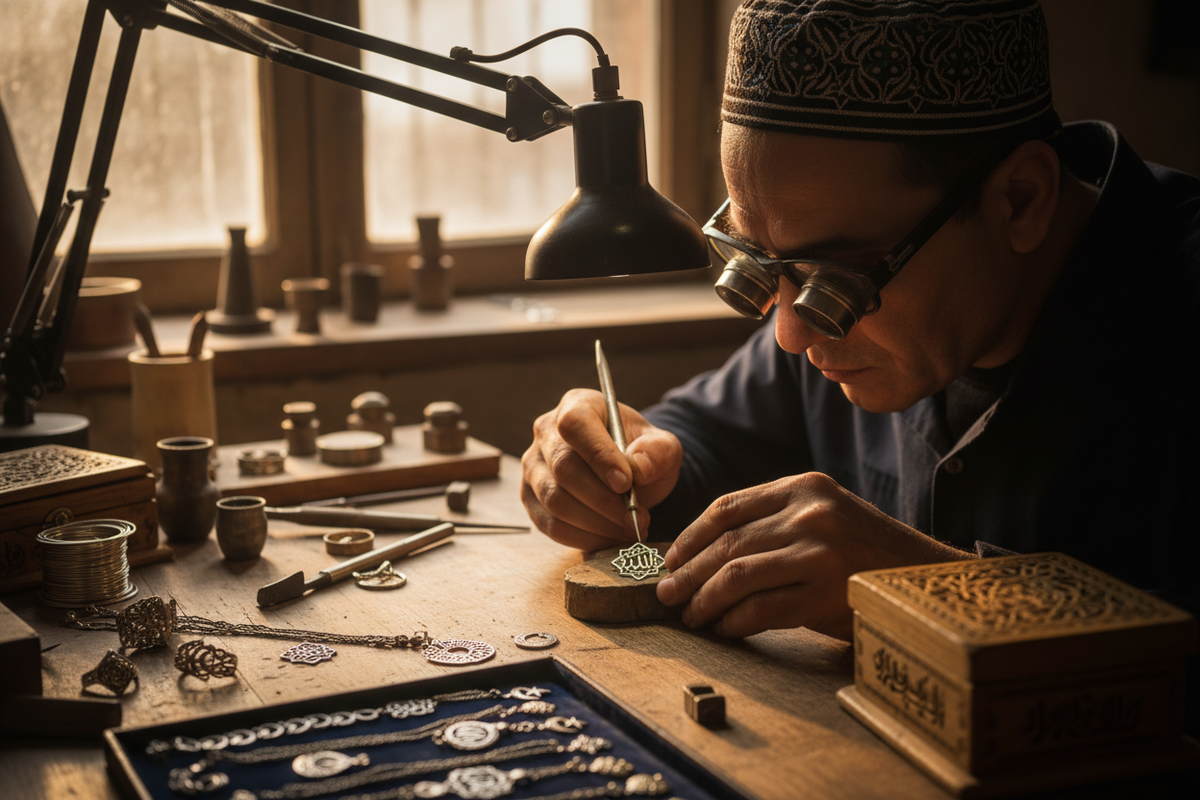
Oriental jewelry stands out for its intricate designs, its chiseled surfaces, its fine arabesque patterns and its bold gold finishes. These features place specific demands on the material:
- Complex reliefs retain more sweat → high chemical resistance needed ✅
- Gold finishes must last → PVD plating on a 316L base ✅
- Pieces are often worn daily, sometimes 24/7 → biocompatibility is essential ✅
- Customers are often sensitive to costume jewelry → hypoallergenic 316L ✅
That's why serious oriental jewelry brands have widely adopted 316L stainless steel as the base material for their collections.
Conclusion
316L stainless steel is hypoallergenic not in spite of its nickel, but because of the way that nickel is locked into its crystal structure and protected by a passive chromium layer. It doesn't migrate to the skin, causes no allergic reaction in almost all sensitive people, and offers unmatched durability in its price range.
For oriental jewelry, often worn for long periods, with elaborate gold finishes and intricate designs, 316L isn't just an option: it's the obvious choice.

Written by Hassan Tigzirt