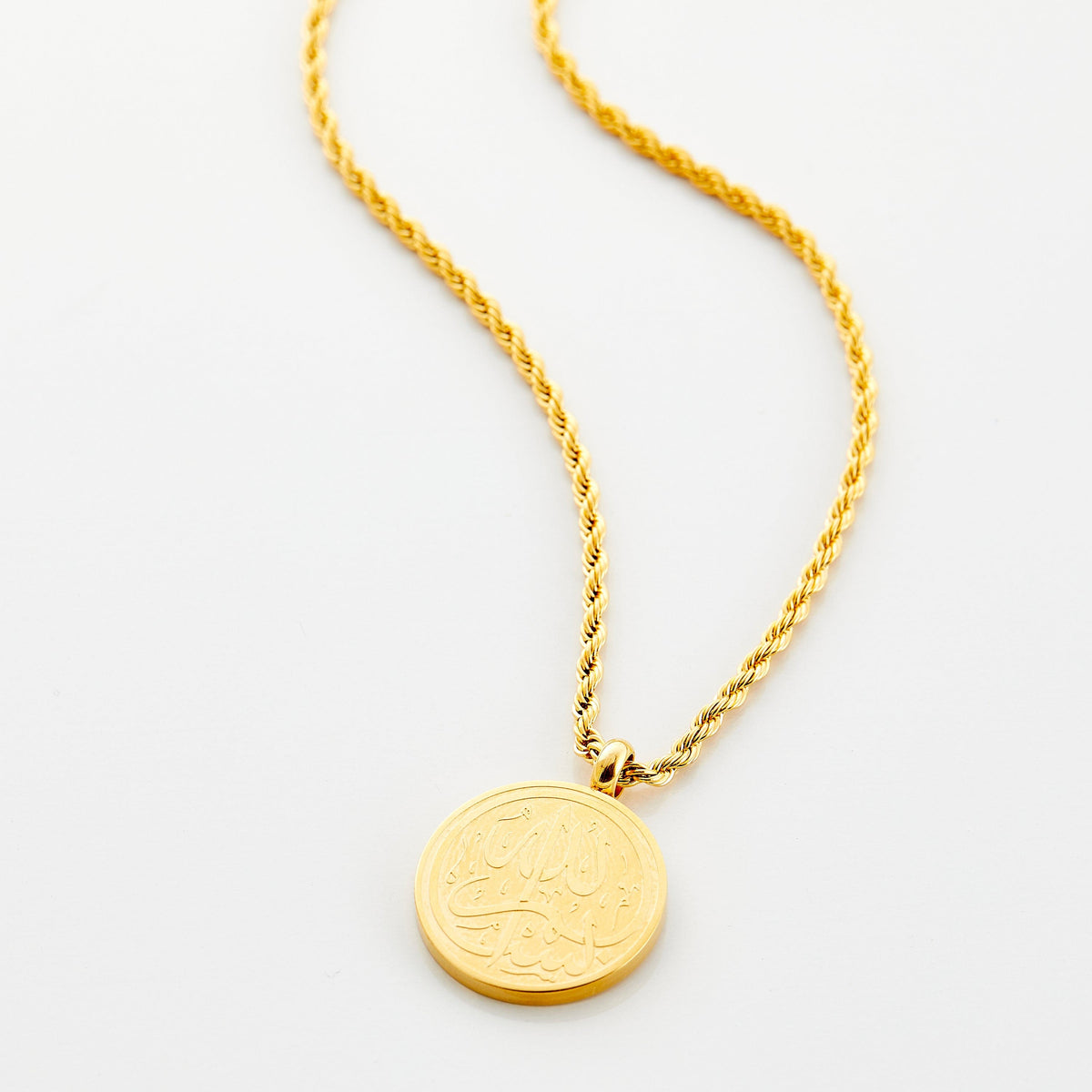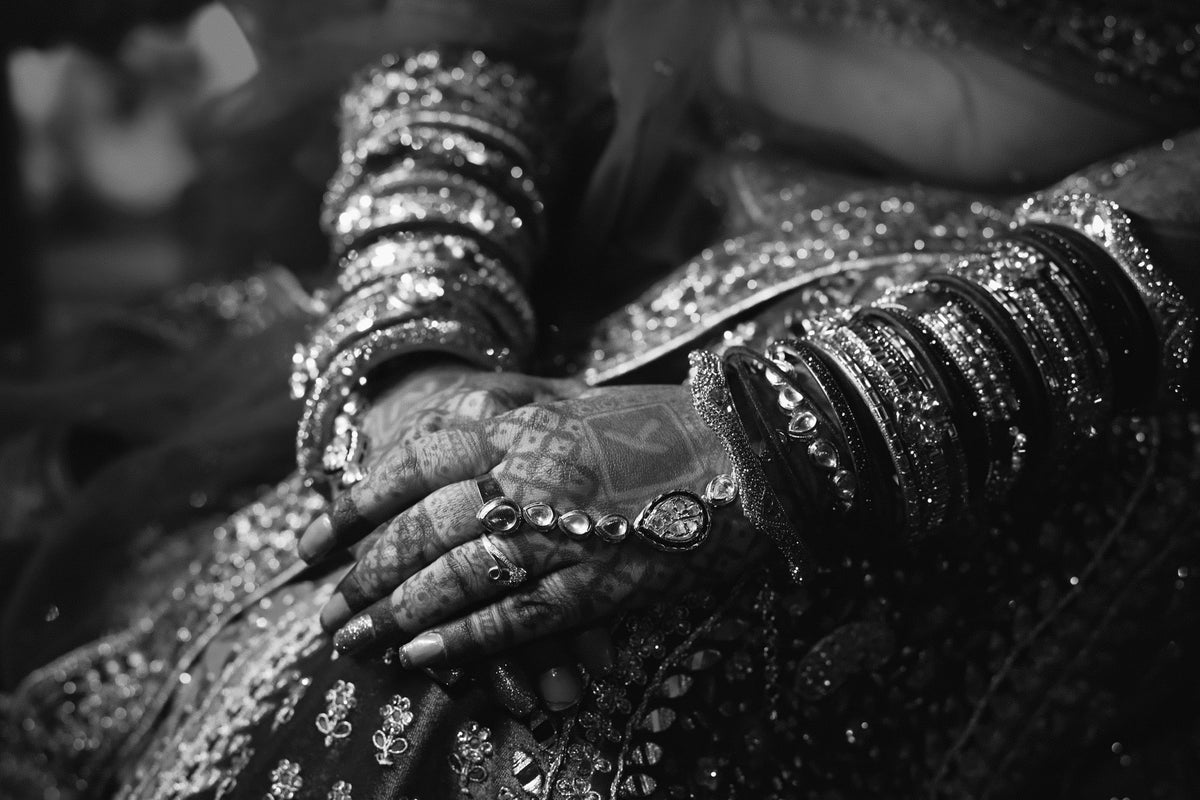
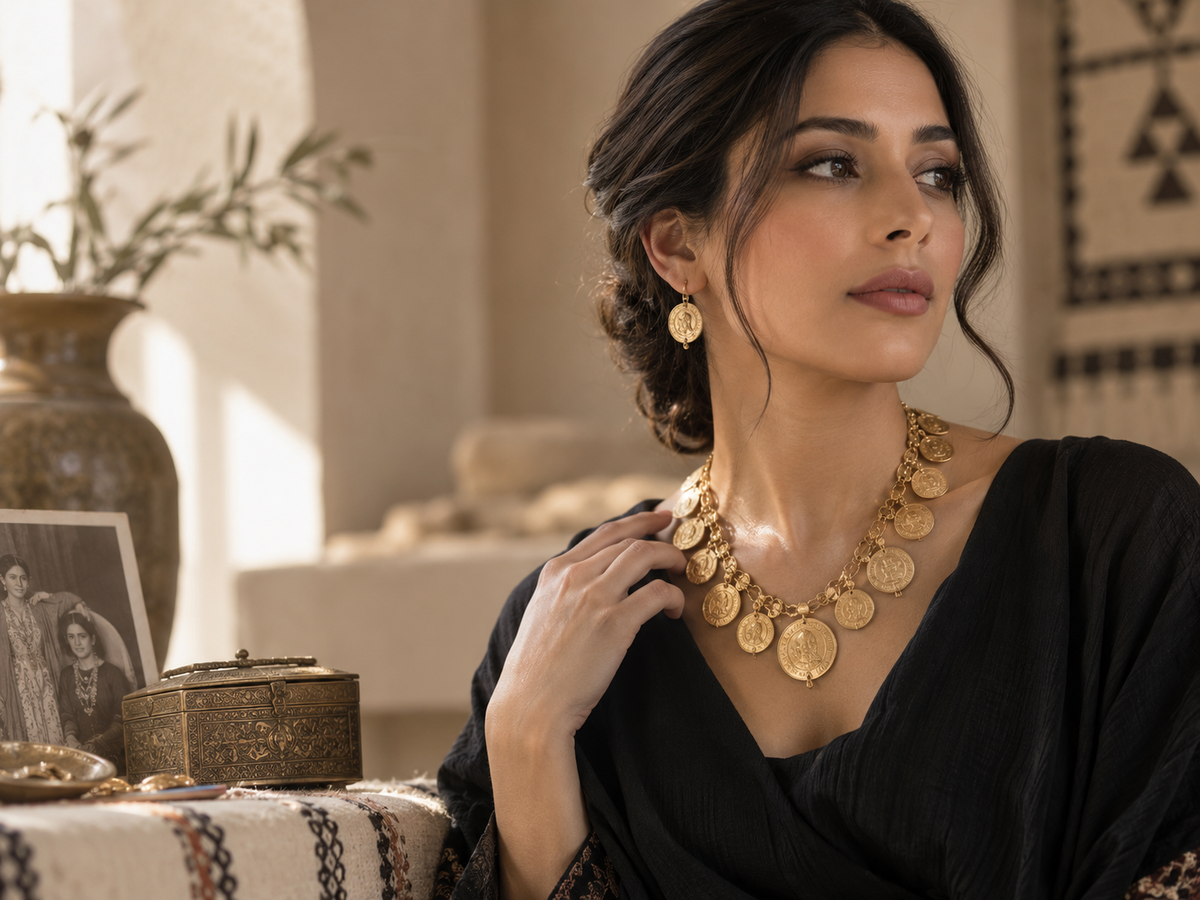
There is something unique about the gold coin necklace among all the world's jewelry: it is adornment, memory, wealth and identity all at once. Worn around the necks of Berber women for centuries, it now crosses borders and generations to become one of the most coveted pieces in contemporary fashion.
But behind this trendy revival lies an extraordinarily rich history, running from Phoenician Antiquity to the souks of Marrakech, from the Ottoman steppes to today's Kabyle weddings. A history in which gold is never just gold: it is protection, inheritance, social status and sometimes a last resort.
From ancient origins to North Africa
The custom of hanging gold coins around the neck didn't begin with Islam. Its roots go back to distant Antiquity. The Phoenicians, great seafarers and traders, spread the practice of turning coins into jewelry as early as the first millennium BCE. For them, gold coins held a double value, commercial and sacred, each one bearing the image of a god or a deified king.
Carthage, founded on the coast of present-day Tunisia around 814 BCE, inherited and expanded this tradition. Excavations of Carthaginian necropolises have revealed necklaces of coins, amulets and gold pendants of remarkable sophistication. The Carthaginian woman carried her wealth on her body, a custom that would never fully disappear from North Africa.
Among Berber peoples, gold worn on the body is not vanity. It is ancient wisdom: what you wear cannot be taken by war, fire or famine.
Berber oral traditionWith the Islamization of North Africa in the 7th century, the practice changed but did not fade. Coins bearing the effigies of Byzantine, then Umayyad, then Abbasid rulers became the new pendants. The symbolism shifted, with no more gods engraved in gold, but the underlying logic stayed the same: the woman is the keeper of the family's wealth, and she wears it.
The Berber dowry: when the necklace is a bank
To understand the gold coin necklace, you have to understand its fundamental role in the marital and economic system of Berber and North African societies: it is a portable bank, a life insurance policy and a statement of social status, all in one piece of jewelry.
The trousseau, the bride's treasure
In Berber tradition, marriage is the occasion for a considerable transfer of wealth. The bride's family builds her trousseau over years, sometimes from childhood. At the heart of this trousseau is jewelry, and among it the gold coin necklace holds pride of place. Each coin added represents family savings, a sacrifice made, a promise for the future.
Wealth that belongs to the woman alone
This point is crucial and often overlooked: in Islamic tradition as in customary Berber law, the bride's jewelry belongs to her alone. Neither her husband nor her in-laws have any right to it. In the event of divorce, widowhood or hardship, these gold coins are her personal capital, her guarantee of economic independence. The coin necklace is therefore not a mere ornament: it is an instrument of female autonomy, codified in custom for centuries.
The number of coins, a sign of prestige
The length of the necklace and the number of coins it holds form a true social language. In some regions of Kabylia, the Moroccan Atlas or the Aurès, a family's prosperity could be read at a glance from the number of coins worn by its daughters at ceremonies. The most impressive necklaces sometimes count several dozen coins and hang down to the navel, a real proclamation of wealth and pride.
The coin necklace across the Islamic world
While Berber North Africa is undoubtedly the most emblematic home of the coin necklace, the piece appears in many forms throughout the Islamic world, with each region bringing its own aesthetic and cultural touches.
Morocco
Moroccan coin necklaces, especially in the Amazigh regions of the High Atlas and the Souss, combine gold coins with red coral beads, a symbol of fertility and protection against the evil eye. French (Napoleon III) and Spanish coins sit alongside locally struck medallions.
Algeria & Kabylia
In Kabylia, the coin necklace (aqrab) is an essential wedding jewel. Ottoman and French coins and local medallions engraved with Berber symbols (Agadez cross, geometric patterns) combine into compositions unique to each family.
Tunisia
Tunisian jewelry blends Ottoman, Andalusian and Jewish influences in necklaces of exceptional ornamental richness. Sfax and Djerba are the capitals of this craft, where coins are often set in filigree mounts of extreme delicacy.
Ottoman Turkey
The Ottoman Empire spread the coin necklace widely across all its territories, from the Balkans to Egypt. Coins struck in Constantinople, often bearing the sultan's tughra (monogram), circulated throughout the Mediterranean world.
Arabia & the Gulf
In the Arabian Peninsula, gold coin necklaces (often British sovereigns or local coins) were worn by Bedouin women as a store of value. The tradition lives on today in the Gulf states, where solid gold jewelry remains a culturally rooted investment.
Egypt & the Levant
In Egypt, Egyptian pound coins and old British sovereigns form the base of wedding necklaces. In Palestine, Syria and Lebanon, they are often enriched with semi-precious stones and calligraphy pendants, creating pieces of great narrative complexity.
Gold coins and their symbolism
Not all gold coins are equal in the eyes of tradition. Some are prized for their purity, others for their historical symbolism, others for their graphic beauty. Here are the most emblematic coins found in the finest oriental necklaces.
| Coin | Origin | Fineness | Symbolism |
|---|---|---|---|
| Sovereign | United Kingdom | 917‰ | The coin most used in Berber and Arab dowries. Royal portrait = prestige and stability. |
| Napoleon (20 francs) | France | 900‰ | Very widespread in North Africa after colonization. Its recognizable profile makes it an iconic coin of the region. |
| Ottoman pound (Lira) | Ottoman Empire | 916‰ | Bears the sultan's tughra; highly symbolic throughout the Near and Middle East. |
| Islamic dinar | Islamic world | 999‰ | A coin with a spiritual character, struck to prophetic standards. Worn for its blessing. |
| Krugerrand | South Africa | 916‰ | Popular in the Gulf states since the 1970s for its high-quality gold. |
| Locally struck medallions | North Africa, Levant | Variable | Bear Berber symbols, Arabic calligraphy or the hand of Fatima. A strong expression of identity. |
The most universally appreciated coin in the Arab-Berber world remains the British sovereign, not out of any particular fondness for the English crown, but because its 917‰ gold content, its sturdiness and its international recognition make it the undisputed standard of value.
The art of making a gold coin necklace
A gold coin necklace isn't simply coins threaded on a chain. The way the coins are mounted, linked and decorated is an art in its own right, passed down from generation to generation in the goldsmiths' souks.
Mounting: framing the coin without damaging it
The first rule of the jeweler's art is never to pierce the coin itself, which would destroy its numismatic and symbolic value. Instead, a mount is made: a thin gold ring that grips the coin by its edge, with a bail (small loop) soldered on for threading. The most elaborate mounts are decorated with filigree, granulation or tiny soldered gold beads.
The chain and the spacers
Decorative elements are often placed between the coins: hollow gold beads, coral beads, turquoise, garnets, or small pendants shaped like a crescent, a hand of Fatima or a diamond. These elements are not purely decorative: each has a specific protective or identity symbolism.
The great producing regions
Jewelry traditions vary by region. In Tiznit (Morocco), the historic capital of Amazigh goldsmithing, artisans work silver and gold using techniques passed down orally for centuries. In Fez, Andalusian refinement dominates. In Sfax and Djerba in Tunisia, Ottoman influence shows in the delicacy of the filigree.
From heritage to trendy jewel
How did a thousand-year-old dowry jewel become one of the most sought-after accessories in contemporary fashion? This journey is far from trivial: it shows how global fashion began looking South and East to renew itself.
The diaspora as a vehicle of transmission
The first generations of North African and Middle Eastern immigrants in Europe brought their family jewelry with them. These pieces first circulated within the communities, worn at weddings and celebrations. The children and grandchildren of these immigrants rediscovered them as powerful symbols of identity, carrying the memory of their grandparents and homelands.
Fashion's gaze on orientalism
Major fashion houses such as Chanel, Dior and Saint Laurent began drawing inspiration from oriental jewelry in their collections. Coin and gold medallion necklaces appeared on the runways, stripped of their context but celebrated for their form. This appropriation, debatable in its methods, helped bring the piece into the Western collective consciousness.
Reclaiming and returning to the roots
The decisive turning point came with social media and a new generation of women from the diasporas reclaiming their jewelry heritage. On Instagram, TikTok and Pinterest, gold coin necklaces are everywhere, worn not as a nod to Western fashion but as an affirmation of identity. Berber, Tunisian and Lebanese jewelry designers are launching their own brands, offering pieces rooted in tradition but designed for today.
Wearing this necklace means wearing my grandmother's story. It isn't fashion: it's memory that I choose to make visible.
Customer testimonial, Paris 2024How to choose a gold coin necklace today
Whether you're looking for a piece full of family history or are simply drawn to the look of these necklaces, here are the key criteria to know before you buy.
-
Gold fineness Choose 18 karat (750‰) or 22 karat (916‰) gold for authentic pieces. 9 karat gold is too heavily alloyed to have the characteristic warmth of traditional oriental jewelry.
-
Authentic coins or reproductions? Traditional necklaces use real coins (sovereigns, Napoleons, Ottoman pounds). Contemporary versions use medallions struck in the image of these coins. Both are legitimate; what matters is knowing what you're buying.
-
The quality of the mount Check that the mount around each coin is properly soldered, with no rough edges, and that the bails are sturdy. A coin necklace is often worn for several days in a row during celebrations, so it has to hold up.
-
Length and number of coins A choker with 3 to 5 coins suits everyday wear. For a wedding or special occasion, long necklaces with 10 to 20 coins create a more traditional, spectacular effect. Length also affects weight, so keep comfort in mind.
-
Spacers and ornaments Red coral, turquoise, garnet, pearls: each stone that accompanies the coins has its own symbolism. Choose knowingly so your jewelry truly reflects you.
-
Buy from committed artisans or designers Favor jewelers who know the history and traditions of these pieces. A gold coin necklace bought with understanding is worth infinitely more than an imitation bought without context.
Explore our coin necklace collection
Necklaces inspired by Berber and oriental traditions, in gold-plated stainless steel, carefully delivered.
View the collectionCynthia Becker, Amazigh Arts in Morocco · Bardo Museum (Tunis), Berber jewelry collections · Vanessa Von Hedemann, Berber Jewelry · Musée des Arts Décoratifs (Paris), Mediterranean jewelry collection